Facebook
 X
 Pinterest
 Copy Link
If you want top-ranked schools, safe streets, a walkable downtown, and a train to Chicago, Naperville is hard to beat. That is the simple reason it keeps topping national lists, and it is why so many families who start “just looking” end up staying for years.
But it is not cheap, and it is not for everyone. Illinois property taxes are high, house prices have climbed, and the pace here is suburban, not city-fast. So why move to Naperville, and when should you not? This guide gives you both sides, so you can decide with your eyes open instead of falling for a ranking alone.
Key Takeaways
- Naperville was ranked Niche’s #1 Best City to Live in America in 2026, for the third year in a row, with an overall grade of A+.
- The two school districts, 203 and 204, are the biggest draw for families, but your exact address decides which one you get.
- The Riverwalk, 130+ parks, a walkable downtown, and the Metra BNSF line are the everyday reasons people love living in Naperville, IL.
- The trade-off is real: higher home prices, high property taxes, and rush-hour traffic on Route 59 and I-88.
- Check the exact tax bill and recent sales for the address you like. A city-wide average will not tell you what you will actually pay.
Why Is Naperville Ranked #1?
Niche’s 2026 ranking put Naperville at #1 Best City to Live in America, and it was not a one-off win. The city took the same top spot in 2025, and it also ranked #1 for Best City to Buy a House, Best City to Raise a Family, and City with the Best Public Schools. Those are four separate lists, and Naperville led all of them.
Rankings like this consider a mix of factors: school quality, crime and safety, housing, jobs, and how residents rate their own city. Naperville scores well across the board rather than shining in just one area, and that balance keeps it on top.
A city can have great schools and still feel dull, or great restaurants and still feel unsafe, but Naperville does not have one weak spot that jumps out.
That said, a ranking is a starting point, not a decision. It will not tell you whether the commute works for your job, whether the tax bill fits your budget, or whether you will like the feel of a particular street. Use the rest of this guide for that part, and treat the #1 badge as a reason to look closer, not a reason to stop asking questions.
Naperville Schools: The Reason Most Families Move Here
Ask ten families why they moved to Naperville, and most of them will start with the schools. The city is served by two public districts, Naperville Community Unit School District 203 and Indian Prairie School District 204, and both are ranked among the best in Illinois and the country.
One 2026 guide puts both districts in the top 5% of Illinois schools, which is a big claim, but it matches what you hear from parents on the ground.
The split matters more than the ranking, though. District 203 covers the central and north parts of town, and District 204 covers the south and west. The line between them runs roughly near 75th Street, but “roughly” is doing a lot of work in that sentence, and street-by-street exceptions exist.
Never pick a house because someone told you it is in a certain district. Check the address with the district before you make an offer, because that one detail can change everything about your move.
District 203: Central and North Naperville
District 203’s high schools are Naperville Central and Naperville North, both well known across the Chicago suburbs. Families in the older, central neighbourhoods and the north side usually fall in this district, and the schools here have a long record of strong test scores and college placement.
If you love older homes, tree-lined streets, and being able to walk to downtown, this is the side of town you will probably look at first.
Living here also puts you close to North Central College, a private liberal arts college right in town, and to the Naperville Public Library, which Livability has ranked among the best public libraries in the country. For a lot of buyers, that mix of older character and strong schools is exactly what they came for, and they are willing to pay for it.
District 204: South and West Naperville
District 204’s high schools are Neuqua Valley, Waubonsie Valley, and Metea Valley, and the district serves the newer south and west parts of Naperville.
The homes here tend to be newer, the lots are often bigger, and you will find a lot of subdivisions built around parks and trails rather than around an old town centre. If you want a newer house and do not mind driving a bit more, this side can feel like better value.
Do not fall into the trap of thinking one district is “better” than the other. Both are strong, and the right one depends on where you live, what your kids need, and what kind of house you want. The smart move is to shortlist homes first, then check the district for each address, not the other way round.
| District | Area of Naperville | High schools |
| District 203 | Central and north | Naperville Central, Naperville North |
| District 204 | South and west | Neuqua Valley, Waubonsie Valley, Metea Valley |
Is Naperville Safe?
Yes, by most measures, Naperville is one of the safest large suburbs in America. It shows up on safest-city lists year after year, and U.S. News ranked it #19 on its Safest Places to Live list for 2025-2026. For families, that peace of mind is often worth as much as the schools, because it changes how you live day to day.
Safety here is not just a number on a list, either. People talk about kids biking to school, evening walks on the Riverwalk, and neighbours who actually know each other, and that kind of everyday calm is hard to fake. Crime is low compared with state and national averages, and violent crime in particular is well below what you see in most cities of this size.
Still, “safe” does not mean “nothing ever happens,” and no suburb is free of property crime or car break-ins. Lock your car, check the block you are buying on, and look at recent local reports for that street, not just the city average. The city-wide picture is strong, but your street is where you will actually live.
Living in Naperville, IL: What Does Everyday Life Feel Like?
A Normal Weekday
A weekday in Naperville feels settled in a good way. Kids head to school, commuters catch the Metra or drive down I-88, and by mid-morning the downtown coffee shops and the Riverwalk paths fill up with walkers, parents with strollers, and people working from laptops. It is busy without feeling rushed, and that is a big part of the appeal for people moving from Chicago.
You will notice quickly that life here runs on routines: school drop-offs, youth sports, library visits, grocery runs, and evening walks. If you like having a plan for your week and a community that shows up for the same events year after year, that rhythm will feel comfortable.
If you need constant newness, it can start to feel a bit samey after a while, and that is worth knowing before you move.
A Normal Weekend
Weekends are when Naperville shows off a bit. Families head to the Riverwalk, kids play in the parks, and downtown fills up with shoppers, diners, and people just out for a walk. Summer brings outdoor concerts, festivals, and events like Ribfest and Blues on the Fox, though you should check the dates each year because they move around.
Winter does not shut the city down, but it does slow it down. The Park District runs lighted ice rinks in winter, there are sledding hills at places like Rotary Hill, and the trails at Springbrook Prairie stay open for cross-country skiing and snowshoeing.
It is a four-season kind of place, and people who love that tend to love Naperville, while people who hate snow will have a long few months to get through.
Who Fits Here, and Who Might Not
Naperville fits families who want great schools and a safe, settled base, and it fits professionals who work locally or commute to Chicago a few days a week. It also fits retirees who want good healthcare close by, parks to walk in, and a downtown they can actually enjoy without driving into the city.
It fits less well if you want a late-night city scene, a short walk to everything, or the lowest possible housing cost. Downtown does quiet down in the evening, most homes need a car for daily life, and you will pay a premium for the schools and safety. None of that is a deal-breaker on its own, but together it is the difference between loving Naperville and feeling stuck in it.
Parks in Naperville: More Than Just the Riverwalk
The Riverwalk, Naperville’s Crown Jewel
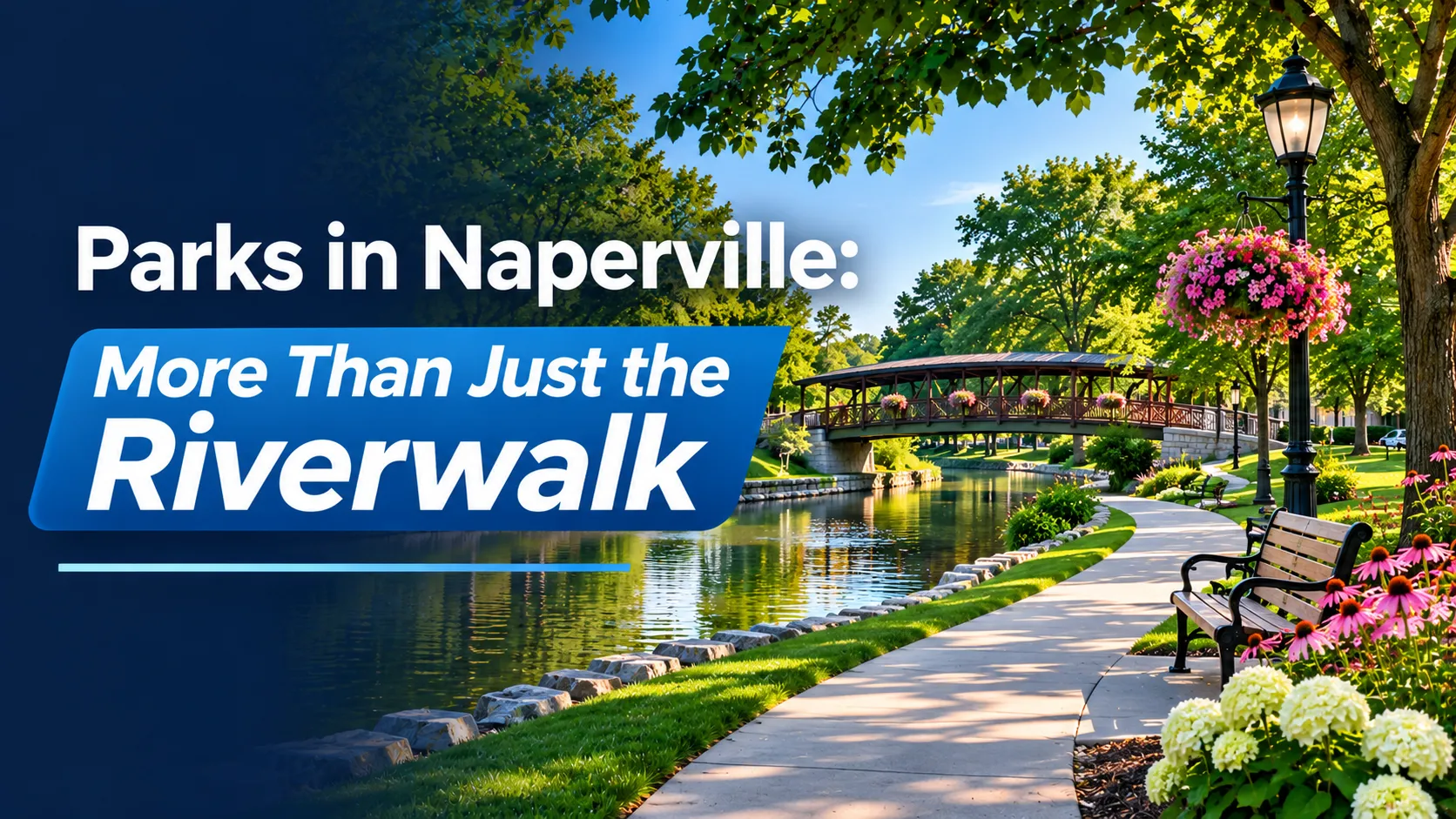
The Naperville Riverwalk is the place everyone mentions first, and for once the hype is fair. It runs 1.75 miles along the DuPage River through downtown, with brick paths, covered bridges, fountains, and places to sit and watch the water go by. It was built in 1981 to mark the city’s 150th birthday, and it has been the heart of downtown ever since.
Walk it on a summer evening, and you will see why people call it the Crown Jewel of Naperville. There is the Grand Pavilion at the west end, the Jaycees Playground for kids, public art along the Century Walk, and the Millennium Carillon in Moser Tower, a 158-foot bell tower with 72 bells.
It is free, it is open to everyone, and it is the kind of place that makes a suburb feel like a real town instead of just a collection of subdivisions.
Beyond the Riverwalk
Naperville has 130+ parks, so the Riverwalk is only the start. Centennial Beach is the one most visitors remember: a historic quarry turned into a beach, open since 1931, with sand, a zero-depth entry for little kids, diving boards, and a sand volleyball court. On a hot July day, it feels more like a lake town than a suburb, and families plan whole weekends around it.
If you want open space instead of crowds, head to Springbrook Prairie Forest Preserve, with wide prairie trails for walking, biking, and birdwatching, or follow the DuPage River Trail through town. The Park District also runs more than 70 miles of trails across the system, though bikes and scooters are not allowed on the Riverwalk itself, so riders need to use the other trails.
Between the parks, the forest preserves, and the sports fields, it is hard to run out of outdoor things to do here, even if you go out every weekend.
Shopping Centers in Naperville: Downtown, Route 59, and Everyday Errands
Downtown Naperville and Main Street Promenade
Downtown Naperville is where shopping feels like an outing instead of a chore. The streets around Main and Jefferson are walkable, with a mix of national brands and local shops: Anderson’s Bookshop, Apple, Anthropologie, Lululemon, and plenty of small boutiques you will only find here. It is the kind of downtown where you go in for one thing and end up staying for lunch, and that is exactly why people love it.
Right in the middle of downtown sits Main Street Promenade, at 55 S. Main Street, an upscale open-air centre with brands like Lululemon, Anthropologie, J.Jill, and Sur La Table, plus restaurants and services.
It is polished without feeling like a mall, and it sits within walking distance of the Riverwalk and the Metra station, so you can park once and do the whole downtown on foot.
For everyday needs, though, most people do not shop downtown every day, and that is where the Route 59 corridor comes in.
The Route 59 Corridor: Westridge Court, Springbrook Prairie Pavilion, and More
Route 59 is Naperville’s everyday shopping spine, especially on the west side. Westridge Court, at Route 59 in the 60564 area, is a large power centre with stores like World Market and Ulta Beauty, while Springbrook Prairie Pavilion, at 75th Street and Route 59, has Whole Foods Market, Nordstrom Rack, and HomeGoods.
Naperville Crossings and Freedom Commons add more big-box, grocery, and home-goods options along the same corridor.
The honest version is that Route 59 shopping is practical, not pretty. You will get everything done in one trip, but you will also sit in traffic at rush hour, and the parking lots are big and busy on weekends. Fox Valley Mall, which a lot of guides mention, is actually in Aurora, not Naperville, though it is a short drive away if you want a classic indoor mall.
For most residents, the split works well: downtown when you want a nice day out, Route 59 when you just need to get things done.
Hospitals and Healthcare in Naperville
Edward Hospital: The Main Hospital in Town
The main hospital in Naperville itself is Edward Hospital, at 801 S. Washington Street. It is the anchor for local healthcare, and it is one of the reasons people feel comfortable moving here at any age, from young families to retirees.
Healthgrades lists it for America’s 100 Best Spine Surgery and for patient safety excellence, which tells you it is not just a small community hospital.
Having a full hospital in town changes daily life in small ways that add up. You are not driving to Chicago for most specialist visits; emergency care is close by, and a lot of local doctors and clinics are tied into the same system.
If healthcare access is high on your list, and it should be if you are moving with older parents or planning to age in place, Naperville checks that box without needing to leave town.
Nearby Hospitals, Clinics, and Everyday Care
Beyond Edward Hospital, Naperville residents also use Northwestern Medicine Central DuPage Hospital in nearby Winfield, plus Elmhurst Hospital and a wide network of clinics, urgent care centres, and specialist offices across the western suburbs.
That matters because no single hospital covers everything, and having strong options in every direction means you are not stuck if you need a second opinion or a specialist.
Everyday care is easy to find here, too, with family doctors, dentists, paediatricians, and urgent care clinics spread across town, not just clustered downtown. Livability also ranked Naperville the healthiest place to live in the U.S. in April 2025, and while a ranking like that is broad, it lines up with what you see on the ground.
Check that your own doctor and insurance network cover the hospital you prefer, because networks change, and that detail matters more than any ranking.
Commuting to Chicago and Working Locally
Most people who work in downtown Chicago take the Metra BNSF line, and Naperville makes that easy. The downtown Naperville station is an express stop, and the Route 59 station gives the west side another option, with express trains reaching Chicago Union Station in about 45 to 50 minutes.
That is a workable commute for a few days a week, and a lot of residents do exactly that, mixing office days with work-from-home days.
Driving is a different story. The drive to downtown Chicago takes roughly 45 to 75 minutes depending on traffic, and rush hour on Route 59 and I-88 can be slow. If your job needs you in the Loop five days a week, test that drive before you buy. Late-night Metra service is also limited, so a night out in Chicago often means driving or planning a ride home.
You do not have to commute to Chicago at all, though, and a lot of residents do not. The I-88 Technology and Research Corridor brings employers right to Naperville’s doorstep, including Edward Hospital, Nicor Gas, Nokia, Calamos, and BP, plus corporate offices in nearby Lisle, Warrenville, and Downers Grove.
Healthcare, technology, finance, and education are all strong locally, so for many people the best commute in Naperville is the short one they already have.
Best Neighbourhoods in Naperville by Lifestyle
Naperville is not one neighbourhood, and picking the right part of town matters as much as picking the right house. Downtown suits people who want to walk to restaurants, the Riverwalk, and the train, and who do not mind older homes and smaller lots.
The north side suits families who want District 203 schools and tree-lined streets close to downtown, while the south and west suit buyers who want newer homes, bigger lots, and District 204 schools.
The table below is a starting point, not a rule. Streets cross district lines, home styles vary block by block, and the only way to know a neighbourhood is to walk it at different times of day. Drive it on a weekday morning, walk it on a Saturday evening, and check the school district for the exact address before you fall in love with a house.
| Area | Best for | Feel |
| Downtown | Walking to shops, Riverwalk, Metra | Older homes, busy, most walkable |
| North Naperville | District 203, close to downtown | Established, tree-lined, family-heavy |
| South Naperville | Newer homes, District 204 | Subdivisions, parks, more driving |
| West / Route 59 | Newer homes, shopping, I-88 access | Newer, practical, car-dependent |
The Real Cost of Moving to Naperville, IL
Here is where you need to be careful, because the numbers you see online do not agree with each other.
Guides published in 2026 cite median home values and prices anywhere from about $509,900 (Niche data) to around $525,000, up to about $550,000 for a typical single-family home, while Redfin’s May to July 2026 median sale price was $631,684. That is a wide range, and it exists because sources measure different things over different periods.
The honest way to read it is this: expect Naperville to be expensive by Illinois standards, and do not budget from a single headline number. Look at recent sales in the exact neighbourhood you like, over the last 90 days, and talk to a local agent about what homes like yours actually sold for.
A median for the whole city will not tell you what a four-bedroom near downtown costs versus a similar house on the west side, and that gap can be tens of thousands of dollars.
Property taxes are the other half of the cost, and they catch a lot of buyers off guard. Illinois has some of the highest property taxes in the country, with secondary sources citing effective rates roughly between 2.08% and 2.6%, and annual bills over $12,000 on a median-priced home.
Always pull the real tax bill for the address using its PIN before you make an offer, and add HOA dues on top if the subdivision has them.
Naperville Pros and Cons at a Glance
Pros |
Cons |
|
|
Who Should Move to Naperville, and Who Should Look Elsewhere
You should seriously consider Naperville if schools are your top priority, if you want a safe suburb with a real downtown, or if you work locally or commute to Chicago a few days a week. You will get a lot for the premium you pay: parks, trails, a library, a hospital, and a community that invests in itself. For a lot of families, that trade is worth it, and they do not regret it.
You should look elsewhere, at least for now, if the tax bill breaks your budget, if you need to be in downtown Chicago every day without a long commute, or if you want a walk-everywhere city lifestyle. Nearby Aurora or Plainfield can offer more house for the money, and Chicago itself offers the nightlife and transit that Naperville does not try to match.
There is no shame in picking a different suburb for a better fit, and a good agent will tell you that instead of pushing you toward the most expensive option.
Frequently Asked Questions for Why Move to Naperville?
Is Naperville a good place to live?
Yes, Niche ranked it #1 Best City to Live in America in 2026. The catch is cost: higher prices and taxes, so it must also be affordable for you.
Is Naperville expensive to live in?
Yes. The cost of living runs about 20% above the U.S. average; 2026 guides cite medians from about $510,000 to $632,000, and property taxes add a lot on top of the mortgage.
How long is the commute from Naperville to Chicago?
Metra BNSF express takes about 45 to 50 minutes to Chicago Union Station; driving takes roughly 45 to 75 minutes. Test your real commute before you buy.
Which school district is Naperville in?
Two districts: 203 in the central and north, 204 in the south and west, with the boundary roughly near 75th Street. Your exact address decides; verify with the district.
Is Naperville good for families without kids, or for retirees?
Yes. Couples get the Riverwalk, parks, and downtown; retirees get Edward Hospital, libraries, and trails. You still pay the schools premium, though.
Is Naperville better than Aurora or Plainfield?
If schools and downtown matter most, Naperville usually wins. If space and budget matter more, Aurora or Plainfield often give you more house for the money.
Final Guidance: Should You Move to Naperville?
If you are asking why to move to Naperville, do it for the right reasons, not just because a list told you to. Visit on a weekday and a weekend, walk the Riverwalk, sit in traffic on Route 59 at rush hour, and check the school district and tax bill for the exact homes you like. Talk to people who live on the street you are considering, because they will tell you things no ranking ever will.
Naperville earns its reputation honestly: great schools, safe streets, parks and a downtown that people actually use, plus a train to Chicago and a hospital in town. It also charges honestly for all of that, in home prices and in taxes, and it asks you to accept suburban pace and Illinois winters in return.
If that trade works for your family and your budget, you will probably love living here. If it does not, you will be happier somewhere that fits better, and that is a good decision too.
Talk to The Haque Group for a buyer consultation, bring your questions about schools, taxes, and neighbourhoods, and you will leave with a clear plan for your move. If you want the family angle in more depth, start with Why Naperville Is Illinois’s Top Choice for Families, and if you are ready for the buying steps, check the HOA guide on HOA dues before you make an offer.